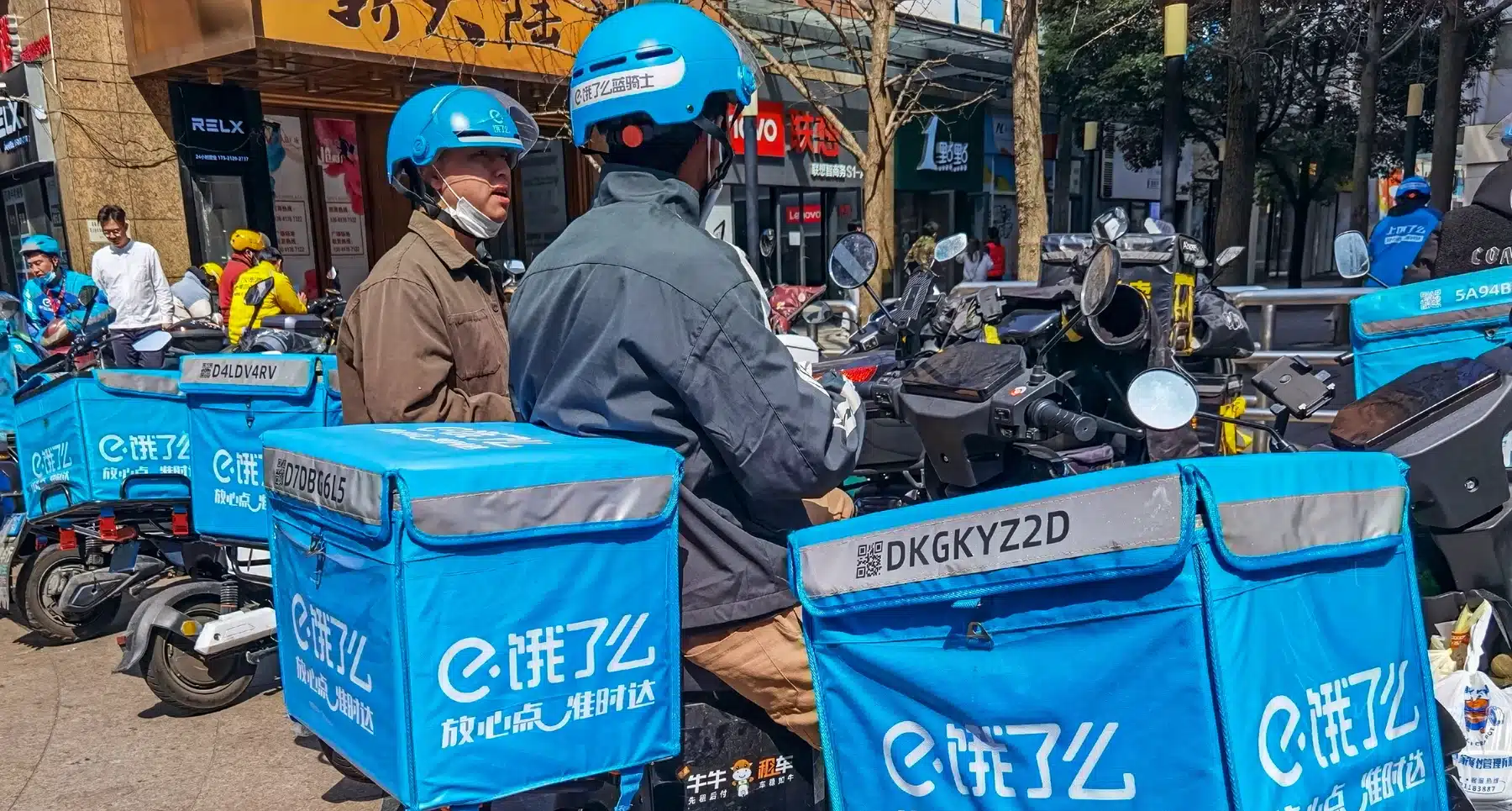
Beijing’s 8 October draft would give platform workers pay floors, rest breaks and limits on algorithmic management. Britain, Spain, the EU, Singapore and Australia have each drawn their own lines since 2021.
China’s Ministry of Human Resources and Social Security published draft rules on 8 October for workers in “new forms of employment”. The term covers delivery riders, ride-hailing drivers and others who get their work through apps. Comments close on 8 November. If adopted, the rules would bring workers who don’t fully meet the legal test for employment under labour law. It would be the first time China has done so through ministry rules.
About 84 million Chinese people do this kind of work, out of 402 million workers. The figures come from a national survey by the All-China Federation of Trade Unions, published in March 2023. Until now, their protection has rested on guidance. In July 2021, the ministry and seven other bodies told platforms to pay at least the local minimum wage. The same guiding opinions asked firms to seek workers’ views before changing algorithms that affect them. Beijing’s new draft turns duties like these into rules, with legal liability for breaches.
For platform workers, the draft would add a written floor of labour rights. It would do so in a country that Freedom House rates “Not Free”, with 9 points out of 100 in its 2026 report. The report says the only legal union is the government-controlled All-China Federation of Trade Unions. It adds that organisers of independent unions face severe penalties.
Three tiers and a 48-hour clock
The draft sorts platform work into three tiers. Where a full employment relationship exists, labour law applies and the company must sign a contract. In the second tier, a platform directs the work through rules and instructions without meeting that test. It must then sign a work agreement with the worker. Freelancers who run their own business through an app fall outside the measures.
For the middle tier, pay must be settled at least once a month. After deducting the cost of equipment that workers supply themselves, earnings may not fall below the local minimum wage. Workers must get appropriate rest after four hours of continuous work. Platforms may not push workers to register as sole traders, or hide behind layers of subcontractors, to escape employer duties.
Under the algorithm clauses, platforms may not make decisions that cut into workers’ major interests by algorithm alone. They must also explain their algorithms to workers and to regulators. Disputes over pay, hours, ratings or an account ban need a human reply within 48 hours.
Delivery times that kept shrinking
In September 2020, Renwu magazine published “Delivery riders, trapped in the system”, an investigation into how platforms timed their couriers. A Meituan station manager told the magazine that the limit for a 3km delivery was an hour in 2016. By 2018 it was 38 minutes. Wang Tianyu is a law researcher at the Chinese Academy of Social Sciences. This week he said the draft’s human review rule answers public concern about workers trapped in algorithms.
JD.com and Meituan said in February 2025 that they would start paying social insurance for full-time riders. A state occupational injury scheme began as a pilot in seven provinces in July 2022. It had enrolled nearly 30 million people by the end of June 2026, and then went nationwide.
How other countries drew the line
In Britain, the Supreme Court ruled unanimously on 19 February 2021 that Uber drivers were “workers”. That status gave them the minimum wage and paid holiday. Their working time ran whenever they were logged into the app in their licensed area and ready to accept trips.
Spain legislated three months later. Its riders’ law of 11 May 2021 presumes that couriers managed by an algorithm through a digital platform are employees. It also gave works councils the right to know the rules behind any algorithm affecting jobs and working conditions.
In California, 58.6% of voters backed Proposition 22 in November 2020. It kept app-based drivers as independent contractors with some benefits. That exempted them from AB5, a 2019 state law on worker classification. The state Supreme Court upheld the measure in July 2024.
The EU’s Platform Work Directive, dated 23 October 2024, combines Spain’s two strands. It presumes an employment relationship where a platform directs and controls the work, and the platform must prove otherwise. Any decision to restrict, suspend or end a worker’s account must be taken by a human being. Member states must write it into national law by 2 December 2026. In 2021, the European Commission estimated that 28 million people in the EU worked through platforms. It put the number wrongly classed as self-employed at 5.5 million.
Singapore’s Platform Workers Act took effect on 1 January 2025. It requires retirement savings contributions for younger platform workers through the Central Provident Fund. Platforms must also provide work injury cover at the level employees get. India’s labour codes took effect on 21 November 2025. They make aggregators pay 1% to 2% of annual turnover towards gig workers’ social security, capped at 5% of what they pay those workers. In Australia, a Fair Work Commission order has set minimum pay for delivery riders since 17 August 2026. Riders on a bicycle or with no vehicle get at least A$31.30 an hour.
Where China’s draft sits
China’s draft keeps a separate middle tier where the EU presumes employment. It sets a higher rate for holiday work without saying how much higher. The South China Morning Post listed that among the draft’s gaps. He Wenjiong, a social security professor at Zhejiang University, welcomed the step. Speaking to the paper, he said the government had “finally taken action on the long overdue occupational security issues of workers” without clear labour relationships.
On algorithms, Beijing’s draft and the EU directive would both stop platforms shutting a worker’s account by automated decision alone. Outside the platforms, US employers attributed more than 120,000 job cuts to AI in the first nine months of 2026. That count comes from Challenger, Gray & Christmas, a commercial outplacement firm.
Consultation closes on 8 November, less than four weeks before the EU deadline. Its outcome will show whether the human review rule and the 48-hour reply survive. After that, the test moves to the apps, and to how Meituan and Didi handle account bans.
Subscribe
Sign-up to receive our newsletter