WWF’s 2026 Living Planet Report finds wildlife down 73% on average since 1970, yet half of tracked populations are stable or rising. Fishing limits, rangers and guarded nesting beaches explain much of the recovery.
Monitored wildlife populations fell by an average of 73% between 1970 and 2022, according to the 2026 Living Planet Report. WWF published it on 7 October. The index behind it, compiled by the Zoological Society of London (ZSL), follows 35,803 population trends across 5,790 vertebrate species. Freshwater populations fell furthest, by 85%.
The headline figure matches the 2024 edition. This year’s dataset adds 967 populations and 295 species, so WWF warns the two aren’t directly comparable. The more telling number sits under the average: 43% of tracked populations are increasing and a further 7% are stable. Large losses elsewhere outweigh those gains in the overall index.
WWF has subtitled the report “The Science of Hope”, and it uses the recoveries to show which policies work. Rebecca Shaw, WWF’s chief scientist, said species “that were in freefall a generation ago are fighting their way back.”
Bluefin tuna return to British waters
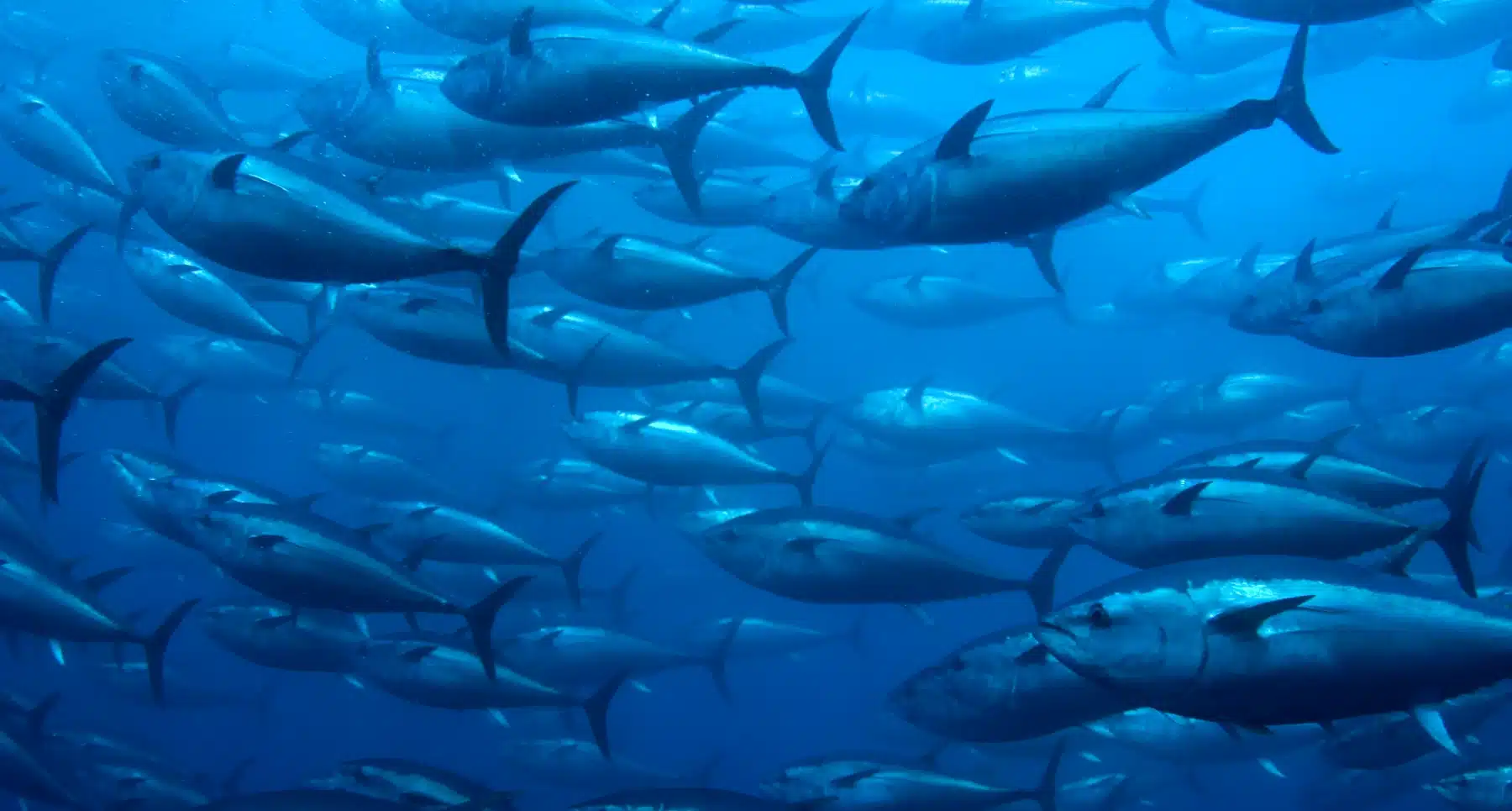
Atlantic bluefin tuna are the recovery most visible from the UK. A 2021 study led by Dr Tom Horton of the University of Exeter found they were common off British coasts until the 1960s, then vanished. Sightings in UK waters picked up again from 2014, and the fish now arrive every summer.
Overfishing in the eastern Atlantic and Mediterranean had cut the population by about 80%. In 2006, scientists found the stock close to collapse. The International Commission for the Conservation of Atlantic Tunas (ICCAT) responded with a 15-year recovery plan. It cut catches, set a minimum size of 30kg for most fisheries and banned spotter aircraft. In 2021 the IUCN moved Atlantic bluefin from Endangered to Least Concern.
Across the Atlantic, strict catch limits off the US and Canada also helped. A Stanford study in PNAS in April found that many Mediterranean-spawned bluefin feed there, inside what the authors call a de facto protected area. Co-author Emilius Aalto is a research scientist at Stanford. He said the findings suggest “keeping to that path of not harvesting juvenile individuals and allowing escapement” is critical to the recovery.
Why the fish come to British seas
Exeter and Cefas researchers tagged 63 bluefin off England, Wales and the Channel Islands. Their tracks, published in Scientific Reports in January 2025, show the fish come north to feed. The authors describe the Channel as a warm, productive meeting point of ocean and coastal waters. They name European sardine and anchovy as likely prey, and note that warm-water species are spreading into the area.
Horton has written that the tuna “are here to feed on the rich diversity of prey fish we have in our waters.” The Channel is now a seasonal hotspot from August to December. Nearly nine in ten fish tracked for at least ten months came back to it.
Professor Barbara Block of Stanford has found that bluefin keep their muscles and gut at 23C to 30C. They do so while feeding in water of 3C to 12C. That warmth lets them hunt in rich northern waters, then swim south to spawn. Larger tagged fish entered the Mediterranean in May and June, while smaller ones stayed in the Bay of Biscay.
In Horton’s 2021 study, UK sightings rose in line with the growing eastern stock. They also tracked the Atlantic Multidecadal Oscillation, a long cycle in North Atlantic temperatures. Plymouth plankton scientist Dr Richard Kirby argues that the cycle’s warm phase, which began in the late 1990s, matters more than stock recovery. The research hasn’t settled how much weight each factor carries.
Tigers, turtles and elephants
Wild tigers have recovered by more than 70%, from about 3,200 in 2010 to around 5,700 in 2025. WWF credits national recovery plans, professional ranger units and larger protected areas. It also cites cross-border work against trafficking and campaigns to reduce demand.
Green turtles took 50 years of work across about 80 nesting countries. In October 2025 the IUCN moved the species from Endangered to Least Concern. No other marine turtle has made that move. Numbers have risen by roughly 28% since the 1970s. The IUCN credits protection of nesting females and eggs on beaches, and community schemes that reduce harvesting. Trade limits and turtle excluder devices in fishing nets helped too. Roderic Mast, co-chair of the IUCN’s marine turtle specialist group, called it “a powerful example of what coordinated global conservation over decades can achieve.”
In southern Africa, some elephant populations are growing where local communities manage the land. WWF also points to anti-trafficking work, judicial reform and lower corruption. African savannah elephants as a whole remain Endangered, and they’re still declining across much of their range.
Where the losses continue
Latin America and the Caribbean recorded a 95% average fall, and Africa 80%. Habitat loss from farming is the most common driver, followed by overexploitation and climate change. In 2023, about $7.3tn flowed into activities that harm nature. Only $220bn went to protecting or restoring it.
WWF sets out next steps for energy, food and finance. In its view, energy has passed a positive tipping point, with cheap solar, wind and batteries driving the shift away from fossil fuels. Food and finance are at an earlier stage. The report says both need their own tipping points this decade.
Dr Steve Smith, a lead author of the report’s tipping-points chapters, works at the University of Exeter. He credits the recoveries to governments, businesses and the public acting together. The bluefin quota will test how long that holds. The UK’s allocation rose from 66 tonnes in 2025 to 230 tonnes a year for 2026 to 2028. That rise rests on a stock rebuilt by a decade of catch cuts.
Subscribe
Sign-up to receive our newsletter