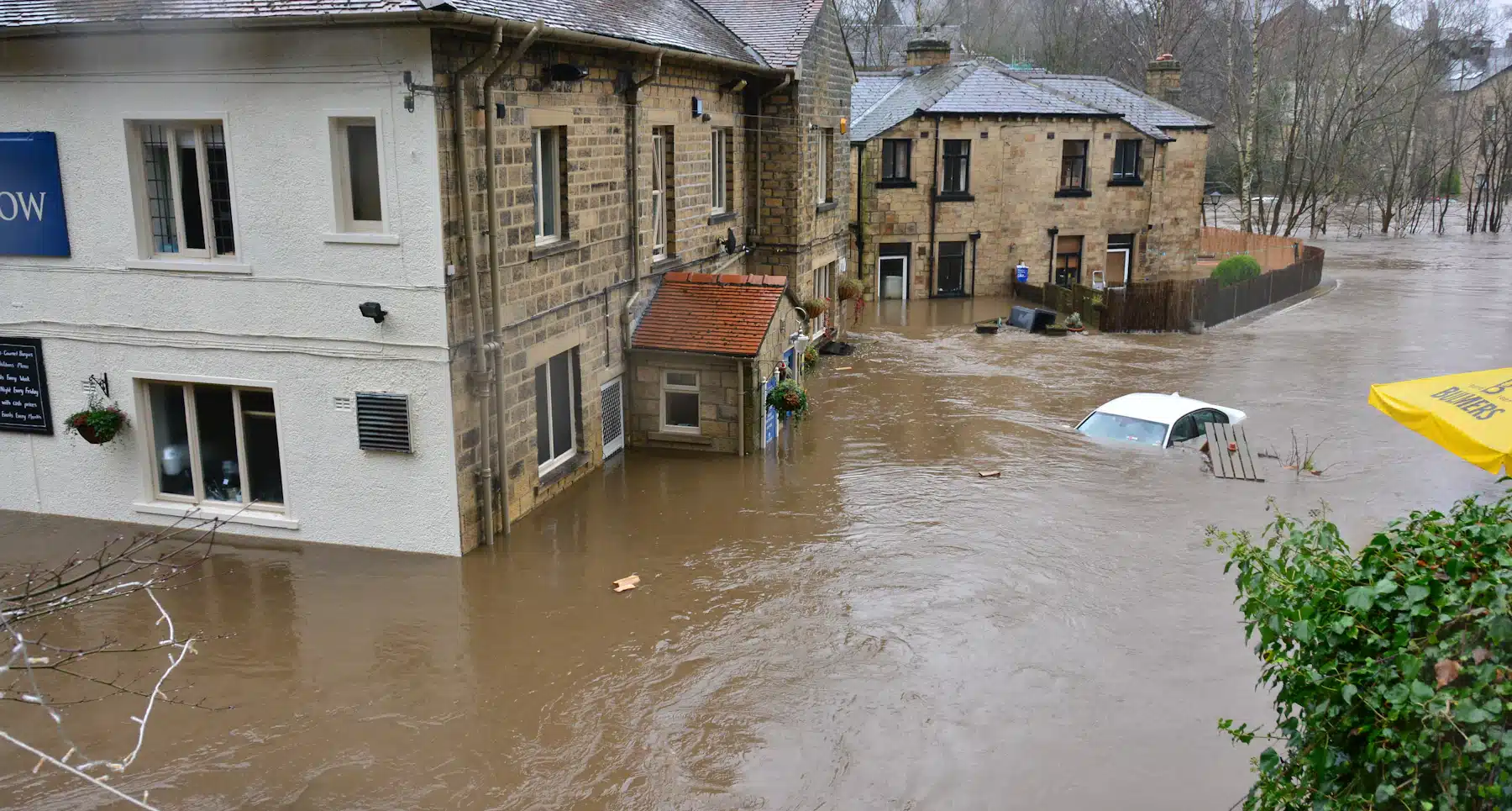
Senior insurance and reinsurance executives say their industry will reprice, restrict and then withdraw cover as climate risk rises. Their memo warns that uninsured homes could hit mortgage markets the way sub-prime lending did before 2008.
Natural catastrophe modellers and actuaries are being asked to give a “haircut” to future projections, according to senior insiders at UK and European insurers. Others are told to “manage down the numbers”. The aim, they say, is “to avoid causing alarm and to keep getting deals done”. Their memo was published on 14 October and coordinated by the non-profit Inside Track. It warns that physical climate risk “is increasing at a dangerous rate”.
Everyone in the group holds, or recently held, a senior role at a leading non-life insurer, reinsurer or broker. On the same day, an anonymous catastrophe modeller wrote for the Bureau of Investigative Journalism that “we are collectively fudging the numbers”.
Reprice, restrict, withdraw
The memo sets out what the insurance insiders call the industry’s plan as risk rises. Insurers will first make policies “much more expensive”. Next they’ll limit cover, for instance by removing wildfire from buildings insurance. Where premiums and claims can’t be balanced, they will “simply withdraw coverage” from some places and sectors. “This process has already begun and will now accelerate,” the executives write.
Most policies are renegotiated every 12 months, which the memo says lets insurers do this “without friction”. Coastal, mountain and flood-prone communities face the sharpest effects, along with farming.
In the US, insurers’ non-renewal rates for homes rose by 96% to 216% across regions between 2018 and 2024, state regulators found. In the EU, only about a quarter of natural catastrophe losses have been insured in recent decades. Petra Hielkema, who chairs the EU insurance regulator EIOPA, gave that figure in April.
A mortgage market built on cover
Mortgage lenders require buildings insurance, as the memo notes. If property cover is limited or withdrawn at scale, the insiders foresee “an economic risk that could precede a financial crash”. They compare it with the sub-prime crisis that set off the 2008 crash. Even before cover disappears, they add, higher premiums for food, property and tourism businesses would feed through to prices.
Inside insurers, the memo says, climate risk rarely leads the board agenda. “In reality, they barely make the top three most pressing issues being discussed,” the executives write. Executive pay increasingly rewards “short-term share price performance”, they say. Pension funds with horizons beyond five or ten years should “interrogate the risk to their capital” if exposed to insurers, the group says.
The memo says many insurers are focused on how to “time the risk” and get out before the costs fall on them. Swiss Re puts insured natural catastrophe losses in the first half of 2026 at $42bn. That’s the lowest first half since 2020 and 16% below the ten-year average. “A less costly first half of the year does not mean the risk has gone away,” said Balz Grollimund, Swiss Re’s head of catastrophe perils.
Two memos, one warning
Two weeks earlier, executives from businesses behind more than half of UK grocery sales issued a similar memo through Inside Track. Responding on LinkedIn, Tessa Clarke, co-founder of the food-sharing app Olio, wrote that “what looks like resilience today is hiding significant financial risk for tomorrow”. Climate change and biodiversity loss, she argued, “have to move out of the ‘sustainability’ box in every Board room”. She added: “They are fundamental questions of supply, cost, risk, growth and ultimately business survival.”
The insurers’ memo asks regulators and governments to recognise a protection gap. It defines that gap as “impending damage that insurers cannot and should not be expected to cover”.
Photo by Chris Gallagher on Unsplash
Subscribe
Sign-up to receive our newsletter