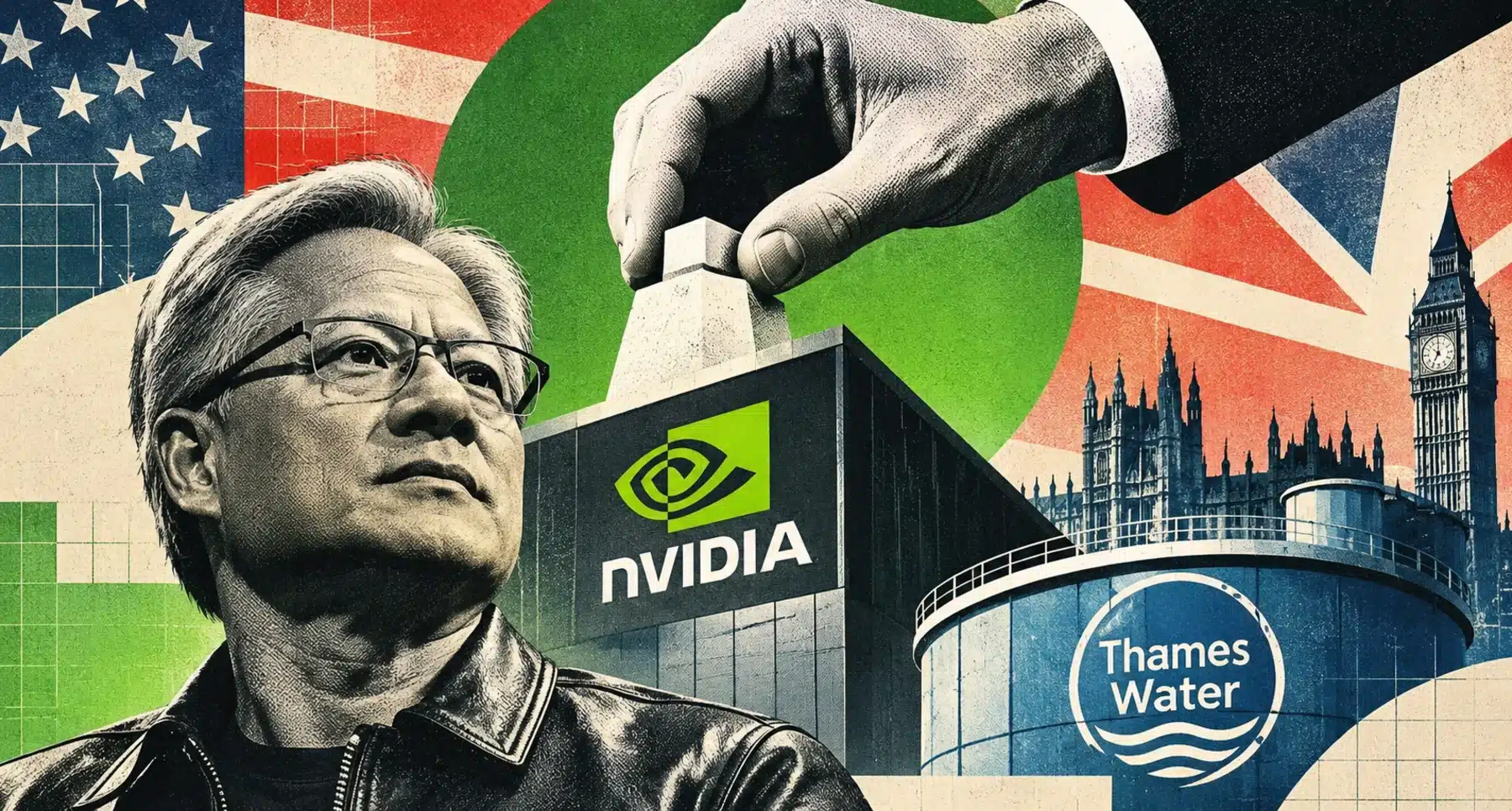
Nvidia has reinstated Jensen Huang after its board took “input from senior levels of the United States government”. From Washington to London, Berlin and Beijing, states are buying stakes, golden shares and board influence in firms they class as strategic.
Nvidia’s board has reinstated Jensen Huang as chief executive, less than a fortnight after he resigned. The board said it “received input from senior levels of the United States government” before its unanimous vote. It found his return “poses no national security risk”, and set up a committee of independent directors on national security and export controls. An inquiry into reports that Huang was the target of a foreign spy effort goes on.
Lawmakers from both parties have objected. AP reported that the board acted at the request of President Donald Trump, and Huang is due before the Senate Banking Committee on 3 December. Washington owns no Nvidia shares, yet its view helped decide who runs the AI chipmaker.
That influence follows a run of direct US moves into strategic firms. Washington took 9.9% of Intel for $8.9bn in August 2025. A month earlier, the Pentagon agreed a deal set to make it MP Materials’ largest shareholder. The US also holds a golden share in US Steel, which gives Washington a veto over plant closures. Commonfund, an investment manager, cites a Council on Foreign Relations tracker of 39 US government investment deals between January 2025 and July 2026.
Europe has been buying in for longer
Germany has owned about 99% of Uniper since it rescued the gas importer in 2022. It must cut that to 25% plus one share by 2028. This year Berlin bought 25.1% of TenneT Germany. As a result, the state now has stakes in three of the country’s four transmission grid operators. In June, Berlin also said it would take 40% of KNDS, the Franco-German tank maker in which France holds 50%.
France has held all of EDF since June 2023. In March, it completed the purchase of Bull, the supercomputer maker owned by Atos, for up to €404m. Paris also holds 29.65% of Eutelsat, the satellite firm, after a capital increase last December.
Spain’s state holding company took 10% of Telefónica in 2024. Its aim was to balance the 9.9% held by Saudi Arabia’s stc. Italy’s Treasury took 16% of the TIM network when KKR bought it the same year. The Netherlands partly took control of Nexperia, a Chinese-owned chipmaker, in October 2025 over security fears. It suspended the order a month later. Even the EU now takes equity, through a €5bn scale-up fund with €1bn from the Commission.
Britain is taking back rail and steel
In Britain, six train operators have passed to the state since May 2025, starting with South Western Railway. Great Western follows on 13 December. After Thameslink moved over in May, the government said eight in ten passenger journeys on the services Great British Railways will run were publicly run.
British Steel passed into public ownership on 16 July, after more than a year under state direction. The state also took an initial 44.9% of Sizewell C when the nuclear plant got the go-ahead, which made it the largest shareholder. It holds 10.89% of Eutelsat, too.
In water, Thames Water’s creditors have offered the government a golden share in a rescue plan with £10bn of new investment. It would give ministers a veto over key decisions. February’s Water White Paper set out plans to abolish Ofwat and allowed for not-for-profit owners, although it proposed no state stakes. No rescue deal for Thames has yet been approved.
China’s state sits inside private tech firms
In China, state-linked funds hold 1% stakes in key units of ByteDance and Weibo, and the Weibo stake came with a board seat. In January 2023, a body linked to the internet regulator took a similar stake in an Alibaba unit. Beijing calls these “special management shares”, and guidance from 2016 ties them to a board seat and a say over content.
The Communist Party says 73.1% of private firms had a Party branch in 2018, up from 58.4% in 2013. A business federation survey, however, put it at 48%. By value, private firms made up 41% of China’s top 100 listed companies in mid-2026, the Peterson Institute found.
State ownership was already large
Even before this wave, state-owned firms were among the world’s biggest. In 2018 they held $45tn of assets among the 2,000 largest companies, about half of global GDP, the IMF found. Their share of those firms’ assets had doubled to 20% in a decade. Meanwhile, state investors from sovereign funds to central banks held a record $60tn in 2025.
Commonfund estimates the US Intel stake, bought for $8.9bn, was worth about $45bn by September. Germany, by contrast, is still selling the Uniper stake it took in a crisis. Bidders including Centrica and Equinor are through to a second round.
For shareholders, the question is who sets strategy once the state has a say. The Senate hearing on 3 December will show how far US lawmakers accept that influence at Nvidia. In Europe, the Uniper sale and the Thames Water decision will show whether governments step back from what they bought, or keep their seats.
Subscribe
Sign-up to receive our newsletter