Brazilian cities have formalised orders for more than 200 electric buses since COP30, and several now write climate targets into their budgets. Earlier hosts show that a summit’s legacy depends on what cities and governments do once the delegates leave, as Türkiye opens COP31 in Antalya.
Recife’s metropolitan region is buying 100 electric buses, Belo Horizonte 96 and Montes Claros 27. They’re among more than 200 buses whose purchase Brazilian cities have formalised with help from a programme launched at COP30. Over $230m in state and federal money sits behind the orders. Projects in the pipeline cover nearly 600 buses.
That pipeline equals about a third of Brazil’s electric bus fleet a year ago, when it stood at 1,700. C40 Cities and the Global Covenant of Mayors run the Brazil Mutirão Program with money from Bloomberg Philanthropies. It has helped seven cities start climate budgeting. Meanwhile, 21 local and state governments are planning waste projects to treat about 30,000 tonnes of food and garden waste a year.
Research cited in a brief from the LSE links a COP presidency with more climate laws afterwards. France and the UAE passed new climate laws while presiding, for instance. Azerbaijan published its first national adaptation plan. “Hosting COP can raise scrutiny of the host country’s climate policy,” the authors write. Belém suggests COP summits face a deeper test later, in council budgets and bus depots.
Buses, budgets and a highway
Salvador adopted a climate governance policy in September. It folds climate action into the city budget and backs a plan for carbon neutrality by 2049. Curitiba signed a climate budgeting decree in October. From 2028, Campinas will flag spending that helps or harms its climate targets. Ilan Cuperstein, regional director for Latin America at C40 Cities, said: “The clear message for other cities is that financing is no longer a barrier: proven pathways exist, and a network is ready to support municipalities”.
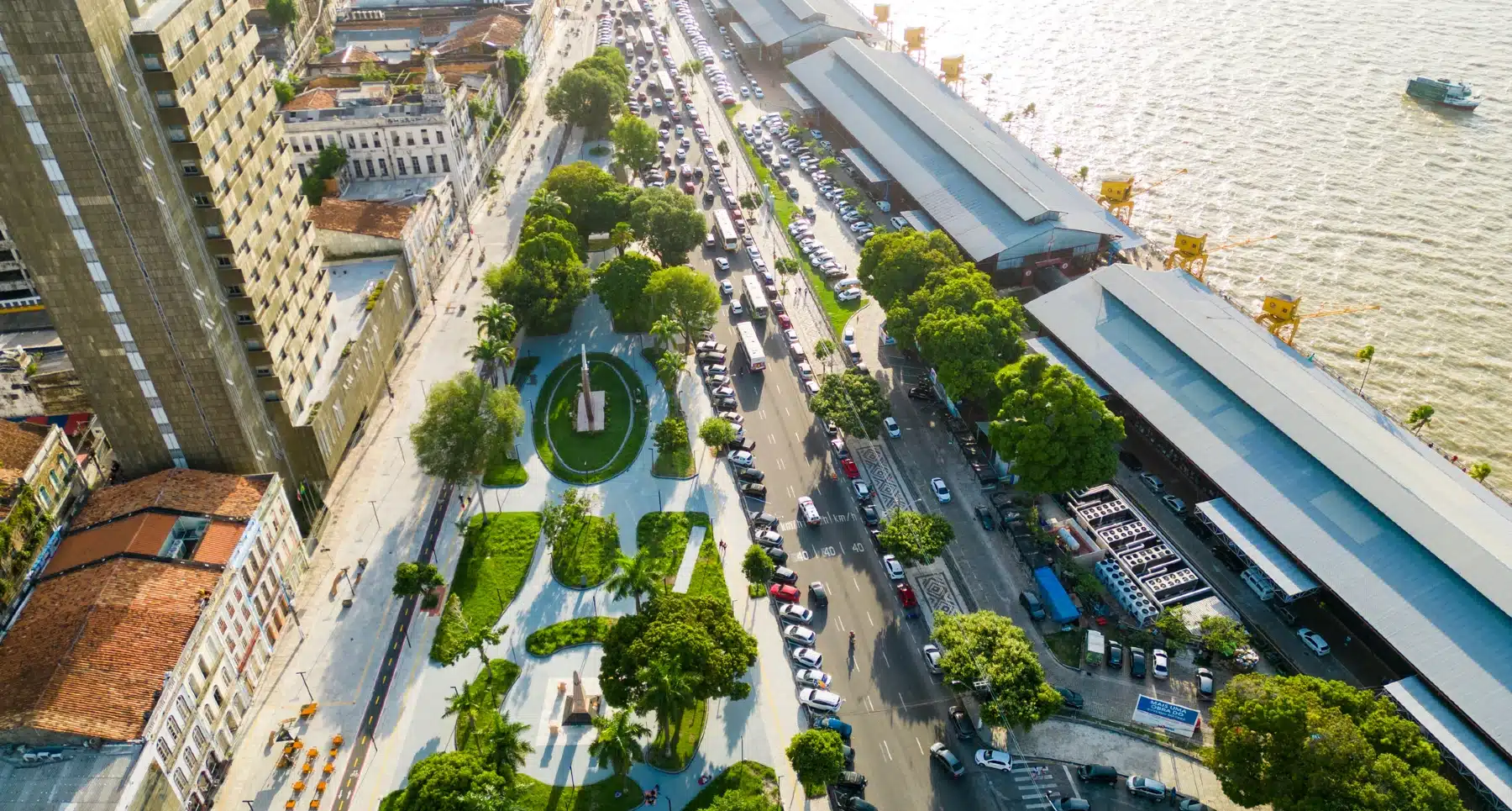
Belém’s own preparations drew federal investment of more than R$4bn. Much of it went on drainage canals, sewage works and parks. Before the summit, only six in 10 residents had access to treated sewage. Ana Maria Corrêa lives beside the Murutucu Canal. “They’re paving the avenue, but our house still has no sewage,” she told Americas Quarterly.
Outside the city, the 13km Avenida Liberdade highway cuts through an environmental protection area. The federal government says the road was never one of its COP30 projects.
Paris kept going, Copenhagen stalled
Paris adopted its first climate plan in 2007, eight years before COP21 produced the Paris Agreement. A decade after the summit, Anne Hidalgo, then mayor, wrote that car traffic had fallen by 56.2% in 20 years. Paris had built more than 1,565km of cycle paths. In 2024, cycling overtook the car for everyday journeys.
Copenhagen hosted COP15 in 2009. That year it set a goal to become the world’s first carbon-neutral capital by 2025. The city dropped the target in 2022. The operator of its Amager waste incinerator had stopped seeking state funding for carbon capture.
Glasgow gave its name to the Glasgow Climate Pact at COP26. The city had already set a net zero target for 2030. Its own route map projects a 60% cut in emissions by 2030 with £23.5bn of investment. An 80% cut would need £36.8bn.
Petrostates and the fossil fuel question
The two hosts before Brazil were oil and gas producers. The UAE launched Alterra, a $30bn climate fund, at COP28 in Dubai. A year later, the fund had spent only a small fraction of the money. Azerbaijan, host of COP29, is expected to raise gas output by a third by 2033.
What Antalya brings
Türkiye opens COP31 in Antalya on Monday under an unusual split. Murat Kurum, its environment minister, holds the presidency and runs the action agenda. Australia’s climate minister, Chris Bowen, leads the formal negotiations. Countries arrive with national plans that would cut emissions by only about 6% by 2035.
The Turkish flagship is a voluntary pledge to raise electricity’s share of final energy use to 35% by 2035. That share stood at almost 24% in 2023. Current policies would take it to only 28% by 2035, according to Climate Action Tracker. Campaigners have criticised the text because it doesn’t commit countries to clean power.
Phasing out fossil fuels isn’t a formal agenda item. Even so, Brazil’s COP30 presidency published a voluntary roadmap on 3 November. It asks countries to draw up transition plans by 2028 and build clean energy in 2029 and 2030. From 2031 to 2033, they would replace fossil fuels faster. Delegates will discuss it on 10 November, yet André Corrêa do Lago, the COP30 president, has said: “We are not suggesting negotiations.”
African negotiators want adaptation finance added to the formal agenda. The UN’s Adaptation Gap Report puts developing countries’ needs at about $305bn a year by 2035. Even if rich countries triple adaptation finance, as COP30 urged, that would cover only 20% to 29% of those needs.
The host’s own record
Türkiye’s 2035 target would let emissions rise 31% above 2018 levels, the LSE brief finds. That is more than its current policies imply. Its new emissions trading system gives sectors exposed to the EU carbon border levy all their allowances free. It also has no cap on total emissions. Renewables supplied more than 40% of Turkish electricity in 2025, but the country hasn’t committed to phase out coal.
Dr Ümit Şahin is a senior scholar at the Istanbul Policy Center at Sabancı University. In the brief’s foreword, he writes: “As the host, Türkiye’s credibility will depend not only on its contribution to the negotiations but also on its actions at home.”
For Türkiye, the measure of COP31 will come after 20 November. It rests on whether the trading system gains a cap that falls each year, and whether coal gets an end date. For Brazil, it’s whether the buses on order reach the streets of Recife and Belo Horizonte.
Every host on this list made a burst of announcements under the spotlight. The LSE brief puts part of the rise in climate laws down to strategic timing, as governments time policy launches for the diplomatic stage. Delivery tends to lag. Copenhagen cancelled its carbon-neutral goal. Glasgow’s own route map falls well short of its 2030 target, and Alterra was slow to spend its money. Belém’s sewage works and Brazil’s buses are heading down the same road.
Subscribe
Sign-up to receive our newsletter